- There are no more items in your cart
- Shipping
- Total £0.00

Radio earpieces and headsets help shunters, yard marshals, and mechanics in bus, coach, and HGV depots communicate clearly in environments where noise regularly exceeds 85 decibels. The best options balance situational awareness, durability, and comfort for long shifts. Top picks include the D-Ring Covert Earpiece, the Two Way Radio Headset, and the Bone Conductor Earpiece.
The morning run-out at a busy transport depot is controlled chaos. Engines are idling, air brakes are hissing, and vehicles are manoeuvring in spaces that leave very little room for error. In this environment, a missed instruction isn't just an inconvenience—it can mean a bus leaving with an unreported defect, a lorry reversing into an occupied bay, or a mechanic stepping out from behind a chassis at exactly the wrong moment.
For shunters, yard marshals, and mechanics, the two-way radio is the single most important tool on their belt. But a radio is only as good as the accessory attached to it. A handheld radio pressed against the ear is not a workable solution when both hands are needed for the job. That's where radio earpieces and headsets come in.
This guide covers everything depot managers and transport operators need to know about choosing the right communication equipment for their teams—from understanding the specific demands of each role to a breakdown of the best products available from Earpiece Online's radio earpiece range.
Why Do Bus, Coach, and HGV Depots Need Specialist Communication Equipment?
What communication challenges do shunters and yard marshals face?
Shunters and yard marshals spend their shifts in the thick of it. They direct vehicles in and out of bays, co-ordinate with traffic offices, and manage the flow of coaches, buses, and heavy goods vehicles through often tight and congested yards. The two non-negotiables for this role are hands-free communication and situational awareness.
Here's why that matters: a shunter guiding a 12-metre coach into a tight bay cannot be holding a radio to their ear. Both hands need to be free for signalling, and both ears need to remain alert to what's happening in the yard around them. A reversing alarm from an approaching vehicle, a shout from a colleague, the sound of braking—these are the auditory cues that keep people safe. Any earpiece that blocks the ear canal completely is a genuine safety hazard in this setting.
Reliable communication is crucial in scenarios such as:
- Co-ordinating simultaneous vehicle movements across a large yard
- Relaying defect information between yard staff and the engineering team
- Managing last-minute vehicle changes before service departure
What are the communication needs of depot mechanics?
Mechanics working in pits, under chassis, or inside engine bays face a different set of challenges. They need to keep both hands on their tools while staying in contact with other team members. Communicating with a shunter waiting for a vehicle to be cleared, or checking a fault code with a colleague across the workshop, should not require removing gloves, picking up a handset, and fumbling with a PTT button.
Noise protection is also a significant concern. Workshop environments expose mechanics to pneumatic tools, angle grinders, and diesel engines running at load. A headset that delivers clear radio audio while offering some degree of noise attenuation can meaningfully reduce auditory fatigue over the course of a 10 or 12-hour shift.
What Are the Key Benefits of Using Radio Earpieces and Headsets in Transport Depots?
Enhanced safety: When instructions arrive clearly the first time, staff don't need to ask for repeats. A yard marshal who hears a clear "hold" command from the traffic office will stop a vehicle before a collision occurs. Ambiguous communication is a direct contributor to yard incidents.
Increased operational efficiency: Faster, clearer communication means faster vehicle turnarounds. When shunters can relay real-time information to the engineering team without walking across the yard or picking up a phone, the whole operation moves more smoothly.
Improved communication clarity: The average noise level in a busy HGV or bus workshop can easily exceed 85 decibels—the threshold at which the UK's Control of Noise at Work Regulations 2005 require employers to take protective action. Standard radio speakers compete poorly against diesel engines and air tools. Earpieces deliver audio directly to the ear, cutting through ambient noise.
Comfort and durability: Depot gear has a hard life. It gets dropped on concrete, exposed to oil and grease, and worn for extended shifts. Quality radio earpieces use Kevlar-reinforced cabling and robust moulded connectors to withstand this punishment.
What Features Should You Look for in a Depot Radio Earpiece or Headset?
Does noise cancellation matter for depot earpieces?
Yes—but with an important caveat. Noise cancellation in the microphone is highly desirable, as it ensures your voice transmits clearly to the person on the other end of the radio. However, noise cancellation in the speaker or ear canal is not always appropriate for depot environments. Yard marshals and shunters need to maintain awareness of ambient sounds. Full noise-cancelling should be reserved for enclosed workshop settings where situational awareness is less critical.
How durable do depot earpieces need to be?
Cabling is the first point of failure on any earpiece used in industrial environments. Look for Kevlar-reinforced cables, which resist the snagging and yanking that occurs when working around vehicles. Connector blocks should be solid and designed for frequent plugging and unplugging. Products made from flexible rubber or robust moulded plastic will outlast cheaper alternatives significantly.
What comfort features matter for long shifts?
For 10 to 12-hour shifts, an earpiece that causes pressure points or ear canal irritation will simply be removed by the user—at which point it provides no benefit at all. The best depot earpieces are those the wearer forgets they have on. Lightweight designs that rest against rather than inside the ear are consistently preferred by depot staff.
Do depot earpieces need to be compatible with specific radios?
Yes. Most quality earpieces are available with connectors for the major radio brands used in UK transport operations, including Motorola 2-pin, Kenwood, Icom, and Hytera. Always confirm compatibility with your existing handsets before ordering in bulk.
Recommended Radio Earpieces and Headsets for Depot Staff
Here is a breakdown of the best products from Earpiece Online's radio earpiece range, mapped to the specific demands of depot environments.
Earpieces
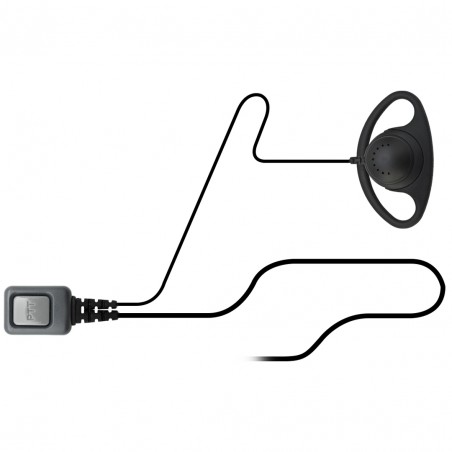
D-Ring Covert Earpiece
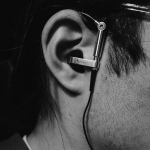
The D-Ring earpiece is widely considered the gold standard for UK transport depots. Its soft, flexible rubber loop hooks over the outer ear rather than entering the canal, which means the user retains full ambient hearing. This is critical for shunters and yard marshals who need to hear both radio traffic and the sounds of the yard simultaneously.
Because the earpiece does not sit inside the ear canal, it is also the most hygienic option for shift-work environments where radios are shared between staff. At the end of a shift, the rubber D-ring can be wiped down with an antibacterial wipe, ready for the next user.
Best for: Shunters, yard marshals, any role requiring situational awareness and shared equipment.
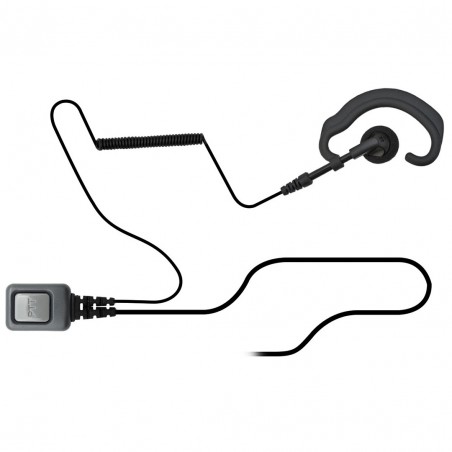
G-Shaped Overt Earpiece
Similar in principle to the D-Ring, the G-shaped earpiece offers a different over-ear fit design that many users find even more comfortable for extended wear. The G-shape provides a secure hold without canal insertion, making it another strong candidate for roles where comfort over long shifts is the priority.
Best for: Staff who find D-Ring designs uncomfortable; extended wear in outdoor yard environments.
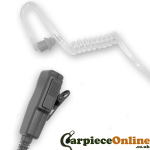
Covert Acoustic Tube Earpiece
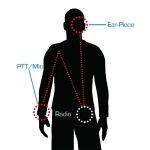
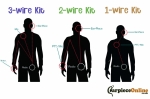
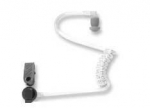
This 2-wire kit features a combined PTT button and microphone, a discreet acoustic tube with a mushroom eartip, and Kevlar-reinforced cabling. The acoustic tube delivers audio into the ear canal, which improves clarity in very loud environments. Note that this style reduces ambient hearing more than the D-Ring design, so it is better suited to roles where noise protection takes priority over situational awareness—such as enclosed workshop settings.
Best for: Mechanics in high-noise workshop environments; indoor use where situational awareness is less critical.
Covert ResoWire Earpiece
The ResoWire earpiece represents the latest development in acoustic tube technology. It uses a ResoWire tube incorporating digital tube technology for superior sound quality, with fewer blockages than traditional acoustic tubes. Kevlar-reinforced cabling and a PTT/microphone combination make this a premium option for staff who need the absolute best in audio clarity.
Best for: Senior mechanics, team leaders, or any role where audio quality is the top priority.
Headsets
Two Way Radio Headset
For enclosed workshop environments with very high noise levels, an over-the-head headset offers the most comprehensive solution. This model sits against both ears and provides significant passive noise reduction, while the adjustable boom arm microphone ensures clear transmission even in very loud conditions. Features include a PTT button, volume control, programmable button, and Kevlar-reinforced cabling.
The over-ear design does reduce situational awareness, so this headset is most appropriate for mechanics working in fixed workshop bays rather than staff moving around open yards.
Best for: Workshop mechanics; fixed-position roles in high-noise enclosed environments.
Bone Conductor Earpiece
Bone conduction technology is an excellent solution for depot environments because it transmits audio through the bones of the skull rather than through the ear canal. This means the ear canal remains completely open—the user receives clear radio communications while retaining full natural hearing of their surroundings. The over-ear clip provides a secure fit during physical activity.
Best for: Shunters and yard marshals who need maximum situational awareness; roles where the ear must remain completely unobstructed.
Throat Mic Earpiece
The throat mic picks up voice vibrations directly from the throat, which makes it exceptionally effective in very loud environments where a lapel microphone would struggle. It is available with connectors for Motorola 2-pin, Kenwood 2-pin, Icom, Entel, and Kenwood multi-pin radios. For mechanics communicating over the sound of running engines, this is a highly practical option.
Best for: Mechanics communicating in extremely loud environments; staff who need reliable voice transmission regardless of background noise levels.
Investing in the Right Equipment: The Long-Term Value
Choosing the right radio earpieces and headsets for your depot is not simply a procurement decision—it is a safety decision. When communication fails in a busy yard, the consequences range from operational delays to serious accidents.
The products recommended above are all available from Earpiece Online's radio earpiece range, with compatibility options across the major radio brands used in UK transport operations, ensuring there is an appropriate solution for every role and every requirement.
A team of shunters equipped with D-Ring earpieces, mechanics using acoustic tube or throat mic options, and a headset available for the noisiest workshop tasks represents a comprehensive communication setup that addresses the specific hazards of depot life.
Start with the role that carries the greatest risk—typically the yard marshal or shunter directing vehicle movements—and build your communication equipment strategy from there.
Frequently Asked Questions
What is the best earpiece for a shunter or yard marshal?
The D-Ring Covert Earpiece is the most widely recommended option for shunters and yard marshals. Its over-ear design does not block the ear canal, which preserves situational awareness—a critical safety requirement for staff directing vehicle movements in active yards. The Bone Conductor Earpiece is an excellent alternative for roles where the ear canal must remain completely unobstructed.
Can acoustic tube earpieces be used safely in a depot yard?
Acoustic tube earpieces like the Covert Acoustic Tube Earpiece reduce ambient hearing, which makes them less suitable for open yard environments where staff need to hear reversing alarms and approaching vehicles. They are better suited to enclosed workshop settings where situational awareness is less critical.
Are there radio earpieces suitable for shared use across shifts?
Yes. The D-Ring Covert Earpiece and G-Shaped Overt Earpiece are both designed for multi-user environments. Because neither design enters the ear canal, both can be wiped down with an antibacterial wipe between users, making them the most hygienic choices for depot shift work.
What radio earpiece is best for mechanics in a noisy workshop?
Mechanics in high-noise workshop environments benefit from earpieces that prioritise audio clarity and voice transmission. The Throat Mic Earpiece picks up voice vibrations directly from the throat, making it highly effective over engine noise. The Two Way Radio Headset provides maximum noise reduction and clear audio for fixed-position workshop roles.
Are these earpieces compatible with Motorola, Kenwood, and Hytera radios?
Yes. All products in the Earpiece Online radio earpiece range are available with connectors for major radio brands including Motorola 2-pin, Kenwood 2-pin, Icom, Entel, and Hytera. Connector compatibility can be selected when adding a product to your basket.
How do I choose the right radio earpiece for my depot team?
Start by mapping each role to its core communication need. Yard-facing staff—shunters and yard marshals—need open-ear designs that preserve situational awareness, making the D-Ring or Bone Conductor the natural starting point. Mechanics in enclosed workshops benefit from in-canal acoustic tube options or a full over-ear headset for maximum noise reduction. For teams sharing equipment across shifts, prioritize designs that don't enter the ear canal, as these are far easier to clean between users. Finally, confirm connector compatibility with your existing radios before ordering in bulk.
(15) (0)
 Whatsapp
Related Products
-
G -shaped Overt Earpiece
G-shaped earpieces (which form a ‘G’ shape as opposed to the ‘D-ring’ desig...
-
D-Ring Covert Earpiece
Our Top quality, flexible rubber D fits comfortably over the ear. The PTT a...
-

Covert Acoustic Tube Earpiece for Kenwood 2-pin Radios
Kenwood 2-Pin/ProTalk Covert Acoustic Tube Radio Earpiece This Kenwood 2-pi...